

 Market Data

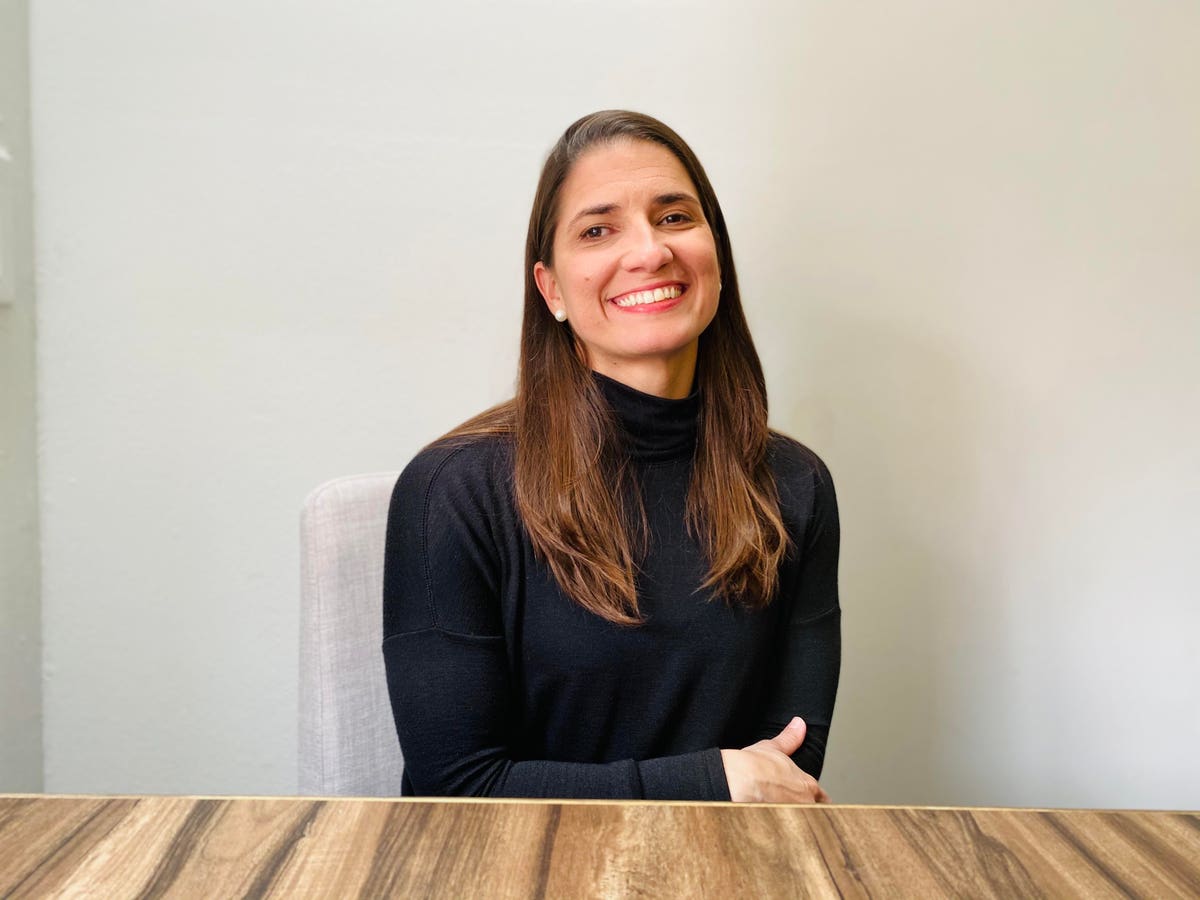
The former Paralympic swimmer, architect and accessibility consultant is bringing an athlete’s perspective to LA28, with a mission to make the Paralympic Games an equal part of the Los Angeles Olympic experience.
(This story based on a Forbes exclusive interview with Ileana Rodriguez on August 10, 2026. All quotes are taken directly from a transcript of the interview.)
When Ileana Rodriguez looks at the 2028 Los Angeles Olympic and Paralympic Games, she does not see a collection of venues, transportation systems and competition schedules.
She sees an opportunity to change the way the world thinks about accessibility.
Rodriguez, a former Paralympic swimmer who competed at the London 2012 Paralympic Games, has spent much of her life navigating the world from a different perspective. Born in Matanzas, Cuba, she became paralyzed as a teenager after doctors discovered she had an arteriovenous malformation, or AVM, of the spine. Today, Rodriguez is vice president of Paralympic Strategy and Relations for LA28, a role that brings together three defining chapters of her life: athlete, architect and advocate for accessibility. That combination may prove particularly important as Los Angeles prepares to host the 2028 Olympic and Paralympic Games.
“For me, my job at LA28 is almost an extension of what I was doing as a consultant,” Rodriguez said. “It kind of is the perfect combination of my career as an architect but also as an athlete.”
Her goal is straightforward but ambitious: Make sure the Paralympic Games are not treated as an afterthought.
From Cuba To The Paralympic Pool
Rodriguez’s journey to Los Angeles began thousands of miles away in Cuba. She was 13 when she began losing strength in her left leg. Initially, doctors struggled to determine what was happening. Eventually, an apparent tumor led physicians to perform surgery, but three days before the procedure Rodriguez stopped walking. The surgery revealed the real problem: an AVM of the spine, a malformation involving veins inside the spinal cord.
The treatment required technology that was not available in Cuba.
“My condition was very rare in general, and in Cuba there was no treatment for it,” Rodriguez recalled.
Her family initially traveled to Mexico so she could receive treatment and continue being evaluated. Eventually, Rodriguez and her family immigrated to the United States, settling in Florida. It took three years for the entire family to be reunited. In America, Rodriguez was able to attend high school—something she said would not have been possible under the circumstances she faced in Cuba.
She also had something else waiting for her: the water.
Swimming had been part of Rodriguez’s life since childhood. Growing up near the beach in Matanzas, her parents taught their children to swim at an early age. At seven, she joined a competitive swimming team. She briefly left swimming to pursue ballet, studying dance for several years. But after her paralysis, swimming became something much more profound.
“When I stopped walking, that was the thing that I knew I could still do,” Rodriguez said. “And that’s why I felt so comfortable in the water, because we all float.”
A Return To Competitive Swimming
That realization ultimately led her back into competitive swimming. Rodriguez developed techniques to compensate for the loss of power in her legs, particularly in breaststroke—a discipline in which the legs are traditionally fundamental to propulsion.
“My legs follow my movement, but they just go straight behind me,” she explained. “So I worked for many years with my coaches to really find that moment where I didn’t have that much power in my stroke because my legs were not going, and then change the stroke a little bit from what the regular breaststroke looks like.”
She also modified her breathing pattern.
The results were extraordinary.
Rodriguez competed at the 2012 Paralympic Games in London, finishing seventh in the 100-meter breaststroke. During her swimming career, she would also hold the American record in the 200-meter breaststroke. But the pool was only the beginning.
An Architect’s View Of Accessibility
While competing at an elite level, Rodriguez was also pursuing a career in architecture.
She earned bachelor’s and master’s degrees in architecture from Florida International University, completing her master’s degree in 2011 while simultaneously preparing for international competition. Her motivation was deeply personal. Rodriguez had spent years seeing buildings described as accessible that did not necessarily feel welcoming or functional to people with disabilities.
“I always saw all these places accessible, but looking like hospitals, honestly,” she said. “And I was like, how can I make a difference in that space?”
The answer was to become an architect herself. Rodriguez eventually founded iDesign Access and worked as an accessibility consultant, advising commercial and other projects in the Houston area. Her objective was not simply to make buildings comply with accessibility codes.
It was to make them work.
“Not only compliant with the code, but actually buildings that were good for the people that were going to use it,” she said.
That distinction is important. A building can technically satisfy a regulation and still be difficult, uncomfortable or intimidating for someone with a disability. Rodriguez became particularly passionate about residential projects, where accessibility can determine whether someone returning home after an injury can actually live independently.
“For me, that’s a huge passion,” she said. “It’s a moment when you have an injury going back to your house and not feeling like you can live there is very shocking.”
Her architectural career ultimately brought her into contact with LA28.
LA28: A Different Approach
Before joining LA28 full time, Rodriguez consulted for the organization. Her work included helping identify venues and consider how they could best accommodate Paralympic sports. That process represented something she had not seen in the same way at previous Games.
Traditionally, accessibility has been an important consideration for Olympic and Paralympic venues. But Rodriguez said LA28 began considering accessibility earlier in the venue-selection process, including the relationship between particular Paralympic sports and the venues being considered.
“In the decision making of the venues themselves, is the first time I have seen it, where the OCOG looked at those Olympic venues that were being picked, but also looking at the Paralympic sports that they were going to go in it, also with an accessibility lens added to it,” Rodriguez said.
The difference, she emphasized, is that accessibility was not something being added later. It was part of the planning process from the beginning. Now, as vice president of Paralympic Strategy and Relations, Rodriguez is helping make sure that philosophy extends throughout the organization. Her responsibilities include working with teams across LA28 to ensure the Paralympic Games are considered robustly and intentionally—not as a secondary event that happens after the Olympics. That work also includes communicating the story of Paralympic athletes. And Rodriguez believes the first message is very simple: See the athlete first. Rodriguez wants audiences approaching LA28 to see Paralympians as athletes first.
“They’re athletes with a disability, but the athlete piece comes first,” she said.
The distinction matters because the journey to a Paralympic Games requires the same fundamental commitment as the journey to an Olympic Games. Training cycles. International competitions. Qualification. Travel. Sacrifice. Pressure.
“The effort that it takes for a Paralympian to make it to the Paralympic Games is as big as an Olympian to make it to the Olympic Games,” Rodriguez said.
That is part of the cultural change she hopes Los Angeles can accelerate. The Paralympic Games should not simply be accessible to audiences. They should be embraced by them. For Rodriguez, one of the most immediate priorities is developing the kind of fandom that surrounds the Olympics.
“I really would love for people to see the Paralympic Games with the same level of excitement that we see the Olympic Games,” she said.
That means filling venues, creating anticipation and building a broader connection between Los Angeles and Paralympic sport. As tickets for the Paralympic Games begin to enter the public consciousness, Rodriguez sees an opportunity to turn curiosity into enthusiasm.
The Olympics And Paralympics Become One
The broader ambition is reflected in the way Rodriguez talks about the relationship between the Olympics and Paralympics. The distinction between the two has historically been institutional, commercial and cultural. But the modern Games increasingly emphasize their connection. For LA28, Rodriguez believes the message should be even clearer.
“It’s one Game, it is the LA28 Games,” she said.
That philosophy could become one of the most important legacies of Los Angeles 2028. For Rodriguez, it is also personal. Her life has taken her from a Cuban beach to an American swimming pool, from Paralympic competition to an architecture studio, and now into the heart of planning the world’s largest sporting events.
Each chapter has prepared her for the next.
With Los Angeles preparing to welcome the world in 2028, Rodriguez’s mission is not merely to make the Games accessible. It is to help build a Games in which accessibility is part of the design from the beginning—and where Paralympic athletes receive the recognition, excitement and respect that their performances demand. For Rodriguez, the goal is ultimately bigger than a venue, a sport or a single Games. It is about fundamentally changing people’s perceptions.
And in Los Angeles, she will have a global stage on which to do it.
Read the full article here