



 Market Data

On Nov. 23, Ukrainian President Volodymyr Zelensky said that Ukrainian forces had sunk the Russian warship Merkury in Benghazi and struck the cargo vessel Angara off Libya’s coast. The reported attacks have brought renewed attention to the risks associated with Moscow’s expanding military presence beyond Europe. They also raise a broader strategic question for the Kremlin: how much can Russia afford to commit to Africa while fighting a resource-intensive war in Europe?
I believe Russia’s greatest challenge in Africa over the coming years will be preserving the influence it has already acquired. New military partnerships can create obligations that continue for years after the initial political or economic gains have been secured. As these commitments accumulate, Moscow will have to weigh the benefits of further expansion against the resources required to sustain its existing presence.
The Hidden Costs of Military Expansion
African governments seeking alternatives to their traditional security partners have created significant opportunities for Moscow. An October 2026 study by the Swedish Defence Research Agency (FOI) identified at least 57 intergovernmental military and security agreements involving Russia and 39 African countries as of March 2026. The agreements range in scope, and some give Moscow access to military infrastructure as well as opportunities for closer cooperation.
The gradual transition from Wagner to the Russian Defense Ministry’s Africa Corps has also changed the financial structure of Russia’s overseas operations. In a September 2025 study, researcher Hanna Notte noted that Africa Corps appeared to rely on Russian state funding. Greater government control gives Moscow more authority over its military activities abroad, while potentially increasing the state’s financial responsibility for maintaining them.
Personnel rotations, equipment maintenance, resupply, and transport security create recurring expenses long after a deployment has begun. For Russia, the opportunity cost is particularly important because the personnel, equipment, and transport capacity required overseas could serve competing military priorities elsewhere. Reducing these commitments can also carry political costs, especially when a partner government’s security depends heavily on continued Russian assistance.
Why Libya Matters
Libya connects Russia’s Mediterranean presence with its military activities elsewhere in Africa. Following the collapse of Bashar al-Assad’s government in December 2024, uncertainty surrounding Russia’s military position in Syria gave Libya greater strategic importance.
Research by the European Council on Foreign Relations identifies Libya as a major logistical hub for Russian activities across the continent. Its importance is also reflected in an August 2026 study by C4ADS, a Washington-based research organization that identified 75 flights supporting Russian-linked military operations in Mali, Burkina Faso, and Niger between January 2025 and July 2026. Maritime transport complements this aviation network, as documented in a November 2026 Defense News report examining Russian military shipments to Africa.
The Benghazi attacks alone provide insufficient evidence of lasting disruption to Russia’s logistics. Their wider significance lies in the potential cost of securing a military network whose geographical reach has expanded considerably.
If attacks on Russian assets outside Europe become more frequent, maintaining existing deployments could place additional demands on Moscow’s resources. Diversifying its logistical arrangements could reduce dependence on individual countries, although maintaining alternative networks would bring financial costs and political obligations of its own.
The Kremlin’s Strategic Choices
Despite international sanctions and nearly five years of full-scale war in Ukraine, Moscow has continued to develop its African partnerships, complicating the argument that Russia is approaching strategic overstretch.
A 2026 assessment by the International Institute for Strategic Studies pointed to the growing size of Africa Corps. On Nov. 19, Reuters reported that Russian forces in Mali had intensified their military activities following earlier setbacks. These developments suggest that Moscow remains willing to deepen its involvement where it considers its interests sufficiently important.
Other areas of Russia’s military engagement show signs of pressure. FOI found that Russian arms exports to Africa had declined during the 2020s, identifying wartime demand, international sanctions, and Western pressure on major buyers as possible contributing factors. Although declining exports do not establish that Russia is struggling to sustain its overseas deployments, the trend illustrates how competing military requirements and external pressures can affect different areas of Moscow’s defense relationships.
Africa offers Russia economic and political benefits that help explain its continued involvement. Access to natural resources, potential income from security services, and diplomatic influence all serve wider Kremlin objectives. FOI also identifies opportunities to circumvent international sanctions among Moscow’s interests on the continent. Some partnerships may therefore retain considerable strategic value even when their immediate financial returns are limited.
Publicly available information offers little insight into how much of this revenue reaches the Russian state or whether it covers the full cost of overseas operations. There is also insufficient evidence that Russia’s African commitments have already undermined its military performance in Ukraine.
The more immediate concern, in my view, is how Moscow will prioritize its obligations if competition for resources intensifies. Russia could continue developing military relationships through training, advisory missions, and targeted arms sales while reserving more expensive deployments for countries offering substantial strategic benefits. The number of agreements could therefore continue to grow even as the Kremlin becomes more selective about the responsibilities it accepts under them.
The Diplomatic and Financial Price
Russia’s military access ultimately depends on the political decisions of its African partners, whose interests do not always coincide with Moscow’s.
Following the Benghazi attacks, Libya’s eastern-based government sought an international investigation. The United Nations Support Mission in Libya also called for an independent inquiry and emphasized the importance of respecting Libyan sovereignty. These reactions provide little evidence of an emerging effort to remove Russian forces from Libya, but they illustrate how military cooperation can become politically more difficult when a host country is exposed to the consequences of an external conflict.
Financing arrangements present another challenge. In August 2025, the Associated Press reported that Moscow had pressed the Central African Republic to replace Wagner with Africa Corps and pay for its security services. Officials in Bangui were reluctant to accept the proposed changes, favoring payments through mineral resources over cash.
A subsequent September 2026 report by Africa Intelligence described a division of responsibilities that would leave Africa Corps with a limited role in Bangui and preserve Wagner-linked commercial and security arrangements.
The reported compromise illustrates the constraints Moscow faces when reorganizing its military partnerships. African governments have their own security priorities, economic limitations, and bargaining power, which can oblige Russia to adapt its preferred arrangements to local circumstances. If the Kremlin seeks greater financial contributions from its partners, some governments may respond by renegotiating their agreements or exploring alternative security relationships.
Toward a More Selective African Strategy
Over the next 12 to 24 months, I do not expect a substantial Russian military withdrawal from Africa. Moscow has spent years developing relationships that advance its economic interests, diplomatic influence, and ambitions as a global power. Abandoning those gains would carry considerable strategic costs, especially in countries where Russia has established itself as an important security partner.
In her 2025 assessment, Notte observed that Africa Corps had focused more on training and routine security support than on the riskier operations associated with Wagner. I expect this tendency toward more selective engagement to become more pronounced if the war in Ukraine continues to absorb substantial resources and the risks surrounding overseas operations increase.
Changes in financing arrangements, a greater emphasis on training and advisory missions, and the concentration of larger deployments in fewer countries would provide early indications of such a shift. Continued expansion of large-scale deployments across multiple countries, despite sustained wartime resource pressures and without greater financial contributions from African partners, would challenge this assessment.
The outlook could also change if the war in Ukraine ends, threats to Russia’s overseas presence remain limited, or African partners assume a greater share of the financial burden.
Russia’s success in Africa should ultimately be measured by the durability of the strategic advantages its partnerships deliver. The Kremlin has demonstrated its ability to expand its military influence while fighting a major war, but preserving that influence will require increasingly careful decisions about where to invest resources and which obligations to accept. If the costs of maintaining its African presence begin to outweigh the benefits, Moscow risks sacrificing the very freedom of action that its international expansion is intended to secure.
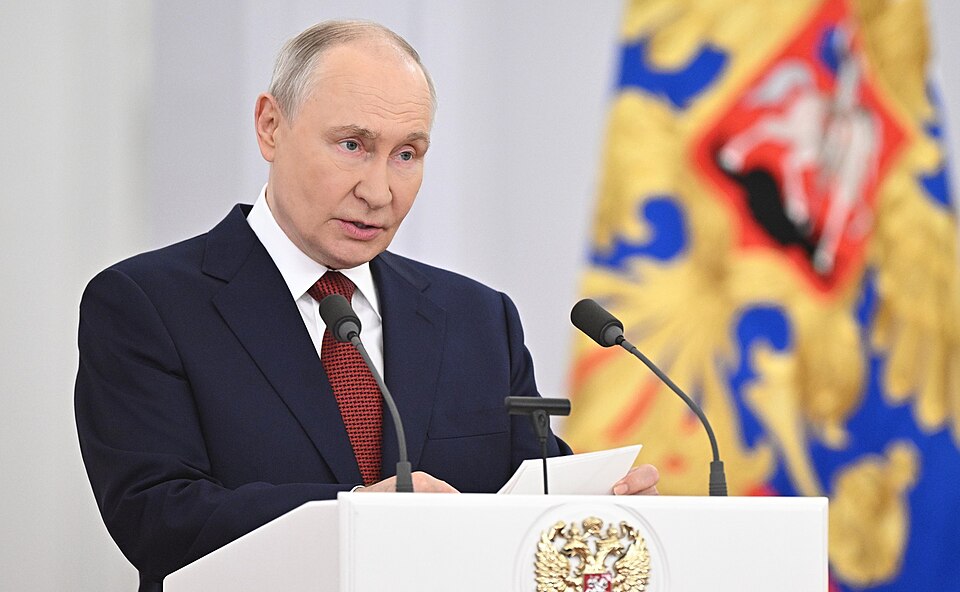
[Photo by Kremlin.ru, CC BY 4.0, via Wikimedia Commons]
The views and opinions expressed in this article are those of the author.
Kanan Heydarov is a geopolitical analyst and international risk specialist focusing on international relations, security policy, and geoeconomics. His work examines geopolitical competition, military strategy, and emerging strategic risks. His articles have appeared in RealClearWorld, The Defence Horizon Journal, and other international publications.
Read the full article here