


 Market Data

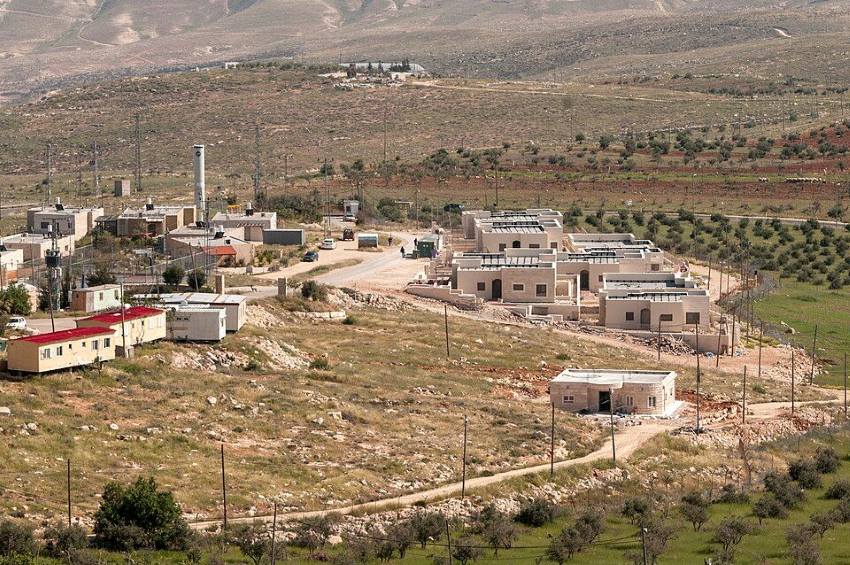
On Nov. 19, 2026, the foreign ministers of 16 Arab and Muslim countries issued a joint statement welcoming new sanctions by the United Kingdom and Australia. The sanctions target people and organisations linked to Israeli settlement activities in the occupied West Bank. They also cover a group accused of blocking humanitarian aid to Gaza. The countries behind the statement include Pakistan, Jordan, Egypt, Saudi Arabia, Qatar, the UAE, Türkiye, Indonesia, Somalia, Kuwait, Oman, Algeria, Libya, Maldives, Niger and Palestine. The statement was released by Pakistan’s Foreign Office.
Australia announced sanctions on three individuals and four organisations, including, for the first time, a company involved in building settlements. The UK widened its own measures against settler groups and the networks that finance them. It also sanctioned an organisation called Tzav 9, which the British government says blocked aid convoys heading to Gaza, most recently in October. Both countries have also joined others in calling for faster entry of food, shelter materials and other help into Gaza.
A central concern in these measures is the E1 settlement plan. E1 is a proposed project in the area east of occupied East Jerusalem. Critics say that building there could split the West Bank in two and cut East Jerusalem off from the rest of the Palestinian territory. This would make it much harder to create a connected Palestinian state. For this reason, E1 has drawn objections from many governments for years, and the 16 ministers named it directly in their statement.
The ministers said that holding people accountable is essential. They supported sanctions on individuals and organisations that carry out, support or help settlement expansion, including the E1 plan. They strongly condemned Israel’s continuing settlement policies and said they hope the UK and Australia will encourage other countries to follow. In their view, these steps are not extreme. The ministers said the measures are in line with international law, including UN Security Council Resolution 2334 from 2016, which calls for an end to settlement activity, and the advisory opinion of the International Court of Justice on 19 July 2024, which found Israel’s occupation of Palestinian territory to be unlawful.
The statement also called on Israel to cancel all settlement measures that it describes as illegal and aimed at changing the geographic and demographic makeup of the Occupied Palestinian Territory. The ministers stressed that Gaza is an integral part of that territory. They again condemned Israel’s military action in Gaza. They gave figures of 75,503 Palestinians killed and 181,251 injured since 7 October 2023. These numbers are usually taken from the Gaza health authorities. They are widely cited but have not been independently confirmed in every detail, and Israel has disputed how such numbers are used.
On the way forward, the ministers called for the full and immediate carrying out of US President Donald Trump’s Comprehensive Plan to End the Gaza Conflict. They also repeated their support for a two-state solution. In their words, this means an independent, sovereign and viable Palestinian state based on the lines of 4 June 1967, with East Jerusalem as its capital. They described this as the only practical path to lasting peace.
Why does this matter beyond the region? Sanctions on settlement activity show that more governments are willing to move from words to action. For years, many countries have said that settlements break international law, but few have punished those who build or fund them. Targeting companies and financial networks, rather than only individuals, shows a shift in approach. Supporters of these steps argue that without real costs, settlement growth will continue and a two-state solution will slip further away.
It is also fair to describe the other side. Israel’s government rejects the view that its settlements are illegal and disputes how the ICJ opinion and other legal findings are applied. Many Israeli officials say the West Bank is disputed land with deep historical and religious ties for Jewish people, and that its final status should be settled through negotiation, not outside pressure. They argue that sanctions can harden positions and make talks harder. Israel has also said in the past that its security operations in Gaza respond to the 7 October 2023 attacks and to the threat of armed groups. Some critics of the sanctions also note that targeting individuals and firms may have limited practical effect.
These disagreements show why the issue is so sensitive. Each side holds firm views about law, security and history, and each uses different facts and terms to explain them. Yet there is broad agreement in much of the world that a lasting settlement requires safety for Israelis, rights for Palestinians, and aid reaching civilians in Gaza without obstruction.
The statement from the 16 countries adds to a growing list of international responses. In recent months, other Western governments have also taken steps against settler violence and financing. The new message from Arab and Muslim countries is that they back such steps and want others to join. Whether more governments act will depend on political will, legal reviews and relations with Israel and its closest allies.
In the end, the joint statement is a call for accountability, humanitarian access and a political settlement. Its main argument is simple: peace needs both fairness under international law and real progress on the ground. How the world responds in the coming weeks will show whether these sanctions are an isolated move or the start of a wider change.
[Representational image: Ralf Roletschek, GFDL 1.2, via Wikimedia Commons
The views and opinions expressed in this article are those of the author.
Professor Mathew James is a leading scholar in insurgency studies, terrorism analysis, and contemporary conflict dynamics. He currently serves as a senior faculty member in the Department of Security and Strategic Studies at North Ridge Western University, where his research explores militant group behavior, radicalization pathways, counterterrorism strategy, and the social impacts of political violence.
Read the full article here