


 Market Data

Theatres of power are perpetually in a state of flux. One such theatre is the Indo-Pacific, increasingly undergirded by the geopolitical rivalry between the United States and China. The longstanding strategic competition between these two behemoths has placed the wider Indo-Pacific at the centre of an evolving geopolitical contest, carrying far-reaching implications for regional stability and the existing international order.
The Indo-Pacific: A Theatre of Competing Strategic Ambitions
Both the United States and China harbour distinct strategic ambitions, anchored in geopolitical contestations which can be traced back to the Cold War era. Their competing ambitions have increasingly pigeonholed countries into making difficult geopolitical choices and aligning themselves with competing camps. The Indo-Pacific, too, has hardly remained untouched by the whirlpool of this rivalry. It was in this evolving strategic context that former Japanese Prime Minister Shinzo Abe championed the vision of a Free and Open Indo-Pacific (FOIP), seeking to uphold a rules-based regional order. The Quad, first established in 2007 and subsequently revived in 2017, gradually emerged as an important grouping within this broader strategic vision. Conceived to uphold peace, champion regional security, and advance the vision of a free and open Indo-Pacific, the grouping has now turned into an important instrument of regional cooperation.
Caught Between Two Powers: The Indo-Pacific’s Uncomfortable Balancing Act
The entire Indo-Pacific region is currently mired in a myriad of issues, with the South China Sea emerging as a major flashpoint. Chinese military depredations, including recurring confrontations with Philippine vessels, have spawned regional security concerns. The Philippines has, consequently, sought to embolden its defence partnerships with like-minded countries, including Australia, Japan and the United States, to securitise itself. The expanded Defence Cooperation Arrangement between Australia and the Philippines in November 2026 materialises this growing convergence. Recognising the need for a more coordinated regional response, Japan and Australia, too, have assumed significant roles in ensuring regional security cooperation. However, these responses have not been particularly impressive, underscoring the need for greater coordination and coherence. Several Southeast Asian nations are wary of having to choose between Washington and Beijing, given their strong economic interdependence with China alongside longstanding security partnerships with the United States. Thus, an act of balancing is what these nations are resorting to, with ASEAN’s continued emphasis on centrality, dialogue and an inclusive regional architecture exemplifying this approach. Recent developments surrounding the Code of Conduct in the South China Sea further illustrate the importance of engaging nations diplomatically in dealing with competing territorial claims. Preserving strategic autonomy while diversifying economic and security partnerships remains an important foreign policy consideration.
Beyond Traditional Security: The Quad Confronts a New Geopolitical Reality
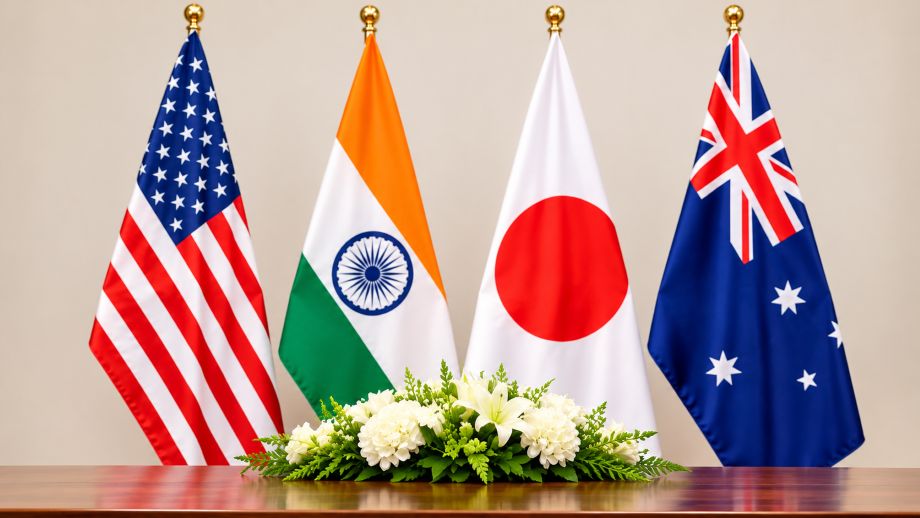
It is in this context that the November 17 Quad Leaders’ Summit, bringing together US President Donald Trump, Indian Prime Minister Narendra Modi, Australian Prime Minister Anthony Albanese, and Japanese Prime Minister Sanae Takaichi, assumes particular significance. What makes this meeting all the more intriguing is the recognition of the dynamic contours of strategic competition, which are now being defined by unconventional domains such as artificial intelligence, cybersecurity and undersea connectivity. The competition is no longer anchored solely in military strength and territorial disputes; rather, it increasingly encompasses questions surrounding the governance of critical technologies, access to essential resources, and the ability to withstand disruptions to global supply chains. These emerging dimensions extend well beyond the conventional characteristics of geopolitical rivalries, underscoring the need for strategic cooperation that is equally responsive to geoeconomic and technological imperatives.
From Strategic Vision to Regional Action: The Quad’s Expanding Institutional Footprint
The grouping has already started working along these imperatives through initiatives such as the Indo-Pacific Partnership for Maritime Domain Awareness (IPMDA), the Quad Vaccine Partnership, and the institutionalisation of cooperation in humanitarian assistance and disaster relief. These initiatives are aimed at facilitating real-time maritime information sharing, leveraging the vaccine manufacturing capabilities of member nations, and ensuring a coordinated regional response to humanitarian emergencies, respectively. On the front of economic and technological concerns, the grouping is seeking to address vulnerabilities arising from concentrated supply chains, particularly in critical minerals, semiconductors and other strategically important industries. The recent Quad Critical Minerals Initiative Framework, launched in May 2026, provides scope for coordinated investments in mining, processing and recycling, with partners intending to mobilise up to $20 billion through government and private-sector contributions.
India’s Quad Calculus: Converting Strategic Convergence into Economic Dividends
This expanding focus on economic and technological cooperation underscores the Quad’s evolving role in addressing strategic dependencies and strengthening the resilience of supply chains across the Indo-Pacific. But this also raises pertinent questions about the dividends member countries, particularly India, can derive. For New Delhi, the grouping is more than just a security partnership; it offers an opportunity to consolidate its position as a significant Indo-Pacific power while simultaneously advancing its economic and technological interests. Owing to its geographical centrality in the region, India occupies a distinctive position within the Quad, where its engagement is defined by its policy of non-alignment and balancing power. It is largely instrumentalising this grouping to counterbalance China’s expanding influence without compromising its independent foreign policy choices, alongside reinforcing its engagement with Southeast Asian nations. Alongside its geopolitical significance, India could capitalise on considerable economic opportunities by continuing to remain a proactive member. Deconcentrating supply chains and making them more resilient is a significant task, particularly given how China has been weaponising its hold over critical minerals. Here, India can leverage Australia’s resource endowments, Japanese technological expertise and American investments to strengthen its domestic manufacturing capabilities. Similarly, deeper cooperation in semiconductors, pharmaceuticals, clean energy and emerging technologies could also facilitate greater integration of Indian industries into global value chains.
The Road Ahead: Can the Quad Deliver Beyond Strategic Declarations?
Ultimately, the future of the Quad will have less to do with the strategic convergence of its four members and will depend predominantly on their ability to translate shared ambitions into tangible regional outcomes. This would entail greater institutional continuity, clearly defined implementation mechanisms and consistent cooperation across domains of strategic and economic significance. The grouping must also remain attentive to ASEAN centrality and the sensitivities of smaller Indo-Pacific economies, whose participation, trust and confidence are indispensable to cultivating a stable regional architecture. For India, the challenge would largely lie in extracting meaningful geopolitical and economic dividends from this partnership while preserving the strategic autonomy that has traditionally defined its foreign policy. The Quad should, therefore, be viewed not as an end in itself, but as a means through which India can advance its broader Indo-Pacific interests. As geopolitical competition continues to intensify, the Indo-Pacific will remain a consequential theatre in shaping the emerging international order. Whether the Quad can evolve into an effective instrument of regional stability and shared prosperity will ultimately depend on its ability to move beyond strategic declarations towards sustained collective action. For India, this presents both a geopolitical responsibility and an economic opportunity that it cannot afford to overlook.
[Image credit: Generated using OpenAI ChatGPT (DALL·E).]
Harsh Kadara is a Research Assistant at Johns Hopkins University’s School of Advanced International Studies (SAIS). He previously conducted research at the Indian Council for Research on International Economic Relations (ICRIER), New Delhi. The views and opinions expressed in this article are those of the author.
Read the full article here