Market Data

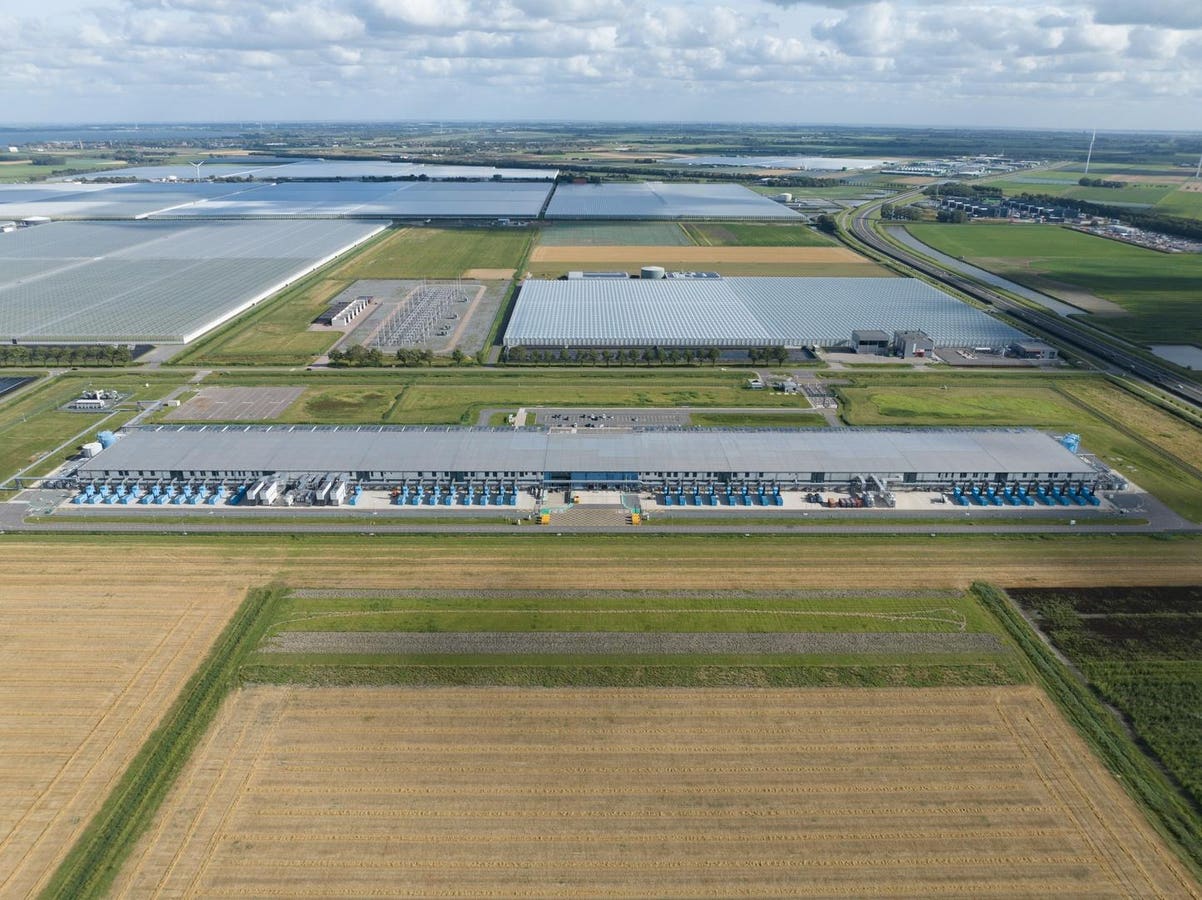
After years of relatively flat power consumption in many advanced economies, utilities are revising load forecasts upward, and data centers are competing for grid connections. In Northern Virginia, in the data center valley, it might take 14 years for a data center to gain access to the grid. Yet, the electrons are needed now. Many pundits fear: AI will break the grid.
This argument misses one important feature of electric systems: demand growth also drives adaptation. Electricity demand is far from a fixed number that utilities simply need to satisfy by simply adding more power plants. New generation will be needed, but modern power systems also adapt through efficiency improvements, short- and long-term storage, demand flexibility, and better utilization of existing infrastructure.
I sat down with leaders at Delta Electronics, Eaton, and DNV to understand how the energy industry is responding to the growth of AI. The answer extends beyond building new power plants: improving efficiency before electricity reaches the chip, rethinking how data centers cool and recover energy, and solving the grid bottlenecks that determine how quickly new demand can be connected.
Connecting Data Centers to the Grid Currently Takes Years
Ali Ghorashi, Senior Vice President at DNV, has spent years evaluating energy projects from the perspective of technical risk and project finance, from onshore and offshore wind to transmission, storage, hydrogen, and other emerging technologies. He sees the current moment as different from previous waves of energy investment. Data centers sit at the intersection of industries that have historically operated separately: real estate, technology, electricity markets, utilities, and infrastructure finance.
“Few people understand the industry,” Ghorashi said. Many participants “come from one of them and don’t know how the rest of the things work.”
That mismatch is becoming increasingly visible in grid interconnection. Large technology companies have capital and strong demand signals, but electricity infrastructure operates on different timelines. Utilities need confidence that loads requesting hundreds of megawatts of capacity will actually materialize and remain economically viable. Regulators are responding by increasing application costs and considering penalties for projects that reserve capacity without moving forward. Some locations, like British Columbia, reject data centers outright.
“Not all the players play the same game,” Ghorashi said.
Solving that coordination challenge is as important as adding new generation. If electricity cannot reach customers because of transmission constraints or permitting delays, the AI energy challenge is only exacerbated.
Saving Each Electron for Useful Work
The same logic applies inside the data center itself. Before electricity performs a calculation, it passes through multiple conversion steps. The physics are straightforward: every conversion step creates losses. Electricity needs to move through power equipment before reaching processors, and improving those conversion steps can reduce total energy demand. Franziskus Gehle, Vice President at Delta Electronics, argues that efficiency starts with understanding the entire system.
“When we are doing power conversion, efficiency is prime,” Gehle explained.
At the scale of modern AI infrastructure, small losses become large numbers. Delta estimates that efficiency improvements from its products saved 45.5 billion kilowatt-hours of electricity between 2010 and 2023. For comparison, that is electricity consumption at the scale of tens of millions of households for a month.
Efficiency also changes how companies think about their own climate impact. Delta has invested in renewable electricity procurement, net-zero buildings, geothermal systems, waste heat recovery, and energy monitoring. Yet Gehle argues that the larger opportunity is improving the infrastructure used by customers.
“This is a much stronger impact than just focusing on our own consumption and energy savings,” he said.
The Importance of Keeping It Cool
As AI chips become more powerful, the challenge moves from electricity delivery to thermal management. Computing ultimately converts electricity into heat, and the density of new AI systems is changing how data centers are designed.
Paul Ryan, Vice President of Energy Transition at Eaton, points to the rapid increase in power density as one of the defining changes.
“140 kilowatts per rack, you cannot cool that with air,” Ryan said.
Liquid cooling is increasingly moving closer to the silicon itself. In addition to reducing energy consumption, cooler machines perform better, which is important for modern AI racks that represent millions of dollars of investment.
The heat itself can also useful. Process heat can support district heating, greenhouses, swimming pools, or industrial applications. Yet, the physics are challenging. Data center heat is typically around 50 to 60°C, while many industrial processes require temperatures above 100°C. Still, the scale of available energy is nontrivial.
“One gigawatt at 50°C, that’s a lot of energy,” Ryan said. “You should be able to do something with it.”
Data Centers Are Becoming Grid Assets
The relationship between data centers and the grid may also change. Today, data centers are often described as large electricity consumers, a statement that is simultaneously correct and incomplete. Many data centers already contain valuable energy assets, including batteries and backup power systems.
Historically, these systems were installed for reliability. They were designed to protect servers during outages. In the future, they could also provide grid services by responding quickly when electricity supply and demand need to be balanced.
“Data centers can stabilize the grid,” Ryan said.
This capability becomes more important as electricity systems add more renewable energy. Grids with higher shares of solar and wind need flexibility, fast response, and technologies such as grid-forming inverters. Data centers may not be the villains in the story, but quite the opposite: they could accelerate deployment of these technologies because they have both the technical need and the ability to invest.
“Data centers are trailblazers who are paying for the technology that will be used in other industries,” Ryan explained.
The broader energy transition is therefore entering a different phase. Ghorashi describes it as moving toward “energy amalgamation,” where success depends less on individual technologies and more on integrating generation, storage, transmission, demand, and digital systems. Those asking what technology is superior are simply barking up the wrong tree.
AI will require more electricity, and building new generation will remain essential. Yet the assumption that more demand automatically equals grid failure ignores how energy systems respond to new demand. While the grid needs new electrons, we can also make existing electrons work harder by reducing conversion losses, improving cooling, recovering wasted energy, and treating data centers as grid assets.
Read the full article here